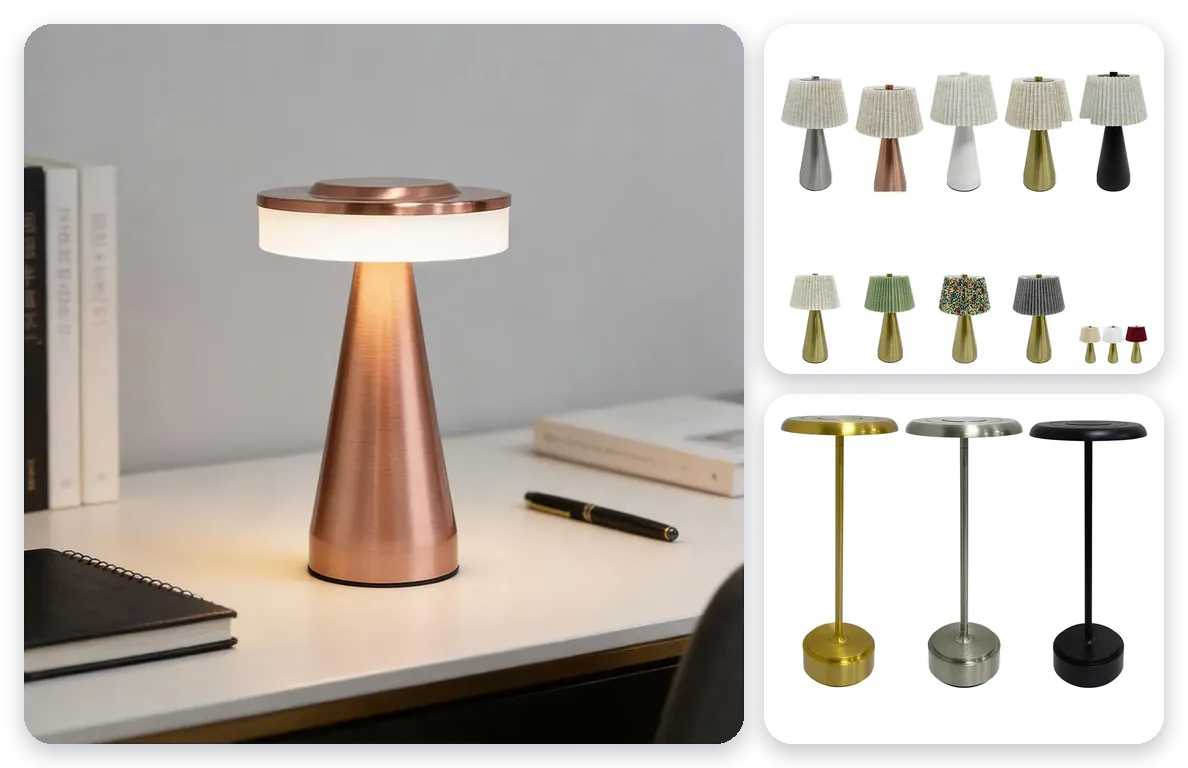
Rechargeable table lamps are one of the easiest lighting categories to take private label. The designs are compact, ship efficiently and photograph well — and most of the customisation buyers want (colour, logo, packaging) can be done on proven designs without new tooling. This guide explains the difference between OEM and ODM, what you can customise, and how a typical project runs.
OEM or ODM — what’s the difference?
| OEM | ODM | |
|---|---|---|
| Starting point | An existing, proven design | A new shape or construction for your collection |
| What changes | Colours, logo, packaging, labels | Form, materials, sometimes electronics |
| Tooling | Usually none | Often required, quoted per project |
| Time to market | Shorter | Longer — includes design and prototype rounds |
| Best for | Retailers, restaurant suppliers, first private-label ranges | Established brands wanting an exclusive design |
Most buyers start with OEM on existing designs, then move to ODM once a range is selling.
What you can customise
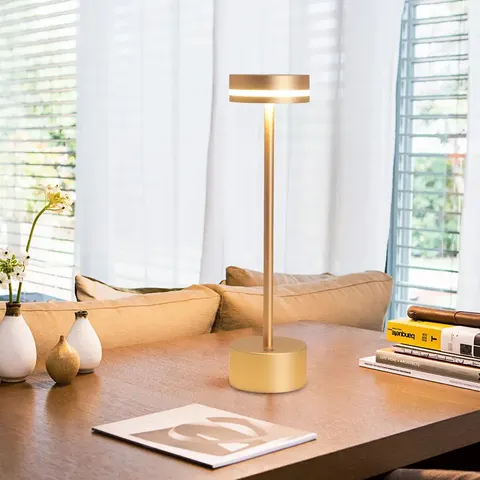
- Finish and colour. Standard metal finishes such as black, gold, silver and rose gold, plus custom colours matched to your palette. Designs like the Halo Slim lamp already come in seven colours.
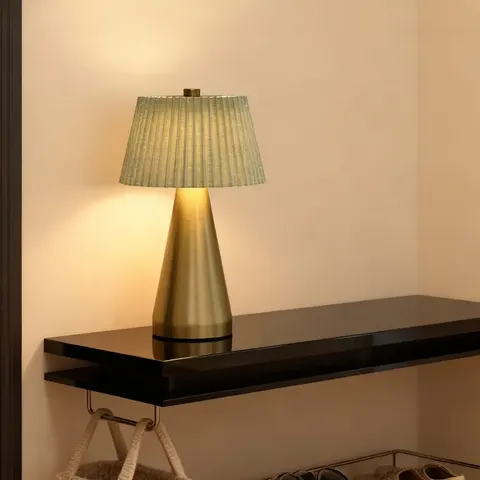
- Shades and materials. Fabric, acrylic, glass and woven shades on selected bases — the Pleated Shade lamp offers several fabrics.
- Logo. On the base or body, and on labels and manuals.
- Packaging. Export cartons, colour boxes, gift boxes and e-commerce-ready packing with your artwork.
- Light settings. Colour temperature and dimming options vary by model — ask what is available for the design you choose.
What to send with your inquiry
The more we know, the faster and more precise the proposal:
- Destination markets and sales channels (retail, e-commerce, hospitality)
- Models of interest, or reference pictures for ODM
- Target quantity per model and per colour
- Logo files (AI, PDF or SVG) and Pantone colour references
- Packaging requirements and your target retail price
- Timeline for samples and first delivery
How a project runs
- Brief — you share the information above.
- Proposal — we recommend models and customisation options, with pricing and MOQ.
- Pre-production sample — a sample in your colour with your logo and packaging, for approval.
- Production — we follow production and check finished goods before shipment; your own inspector or a third-party QC company is welcome.
- Delivery — export packing, documents and handover to your forwarder.
Good to know before you budget
- MOQ rises with customisation. Custom colours and printed packaging usually need a higher minimum than standard items.
- Specifications are confirmed per configuration. Battery capacity, runtime and compliance documents are confirmed for the exact version you order — not taken from a generic catalogue.
- Artwork is approved before production. You sign off logo position and packaging proofs first.
- Samples and tooling are quoted up front, so there are no surprises later.
Ready to start?
Browse the full range, add the designs you like to your quote list, and send us your brief. Read more about our process on the OEM / ODM page.